Artificial intelligence is developing quickly, and many people are wondering how it will affect their lives in the next five to 10 years. The growth of AI has raised concerns about job security and future career paths. High school students feel this especially strongly. Most have never lived in a world without technology, and many now see AI being used for almost everything. Some worry that jobs will be replaced, but others recognize that AI may also create new career opportunities.
AI has been used in daily life for years. It became more widely known around 2019 when GPT-2 was released. Soon after, companies such as OpenAI gained attention with ChatGPT. The program reached 100 million users in just two months, which was faster than the internet’s early growth. In 2023, the global AI market was valued at about $189 billion. It is expected to rise to $4.8 trillion by 2033.
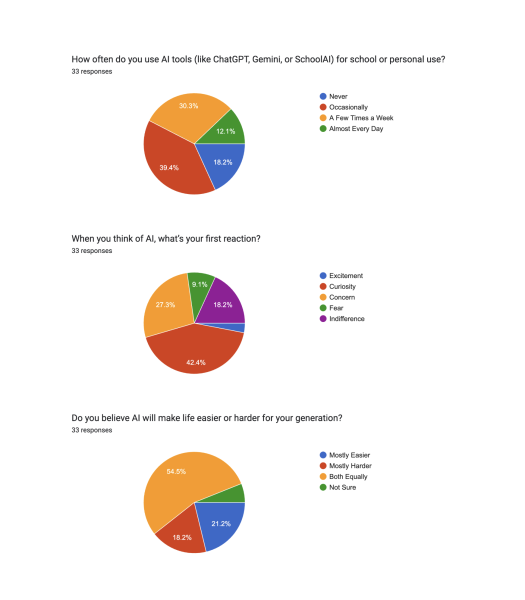
To learn how students view these changes, The Madisonian sent out an anonymous poll with a 95 percent confidence rate. The poll asked students what they think AI can do, how it affects school, and what they expect in the future. Some questions were open-ended. Others collected multiple-choice data.
One open-ended question asked, “What worries you most about AI in the next 10 years?” Students gave a range of responses. One wrote, “It will destroy jobs. People who lose work will try to retaliate. Simple work will be automated, and only the highly educated will be needed.” Another student said, “It will override the creative side of many industries. It could hurt animation and writing because some companies will use it as a cheaper option than real artists.” These answers show concern for both the school system and the job market.
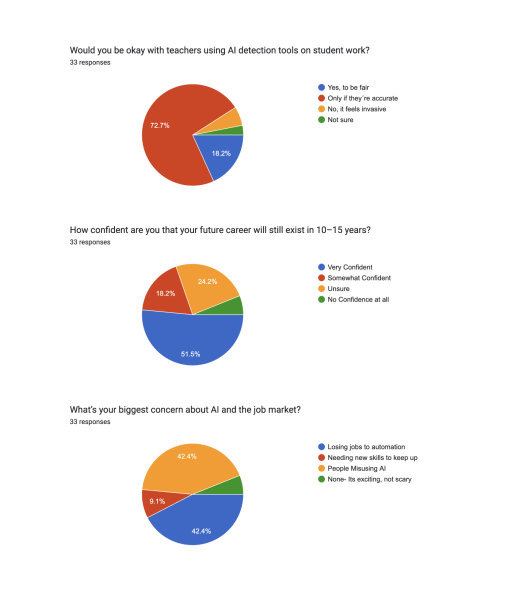
Another part of the poll focused on careers. One question asked, “What is your biggest concern about AI and the job market?” Forty-two percent selected “losing jobs to automation,” and another 42 percent selected “people misusing AI.” Some industries are already feeling the impact. An AI musician named Xenia Monet even charted on Billboard, and a record label offered $3 million to the project.
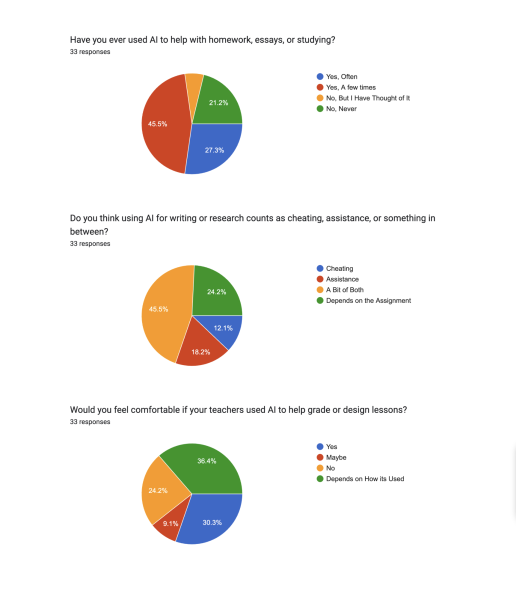
Students were also asked about AI in education. One question said, “Would you feel comfortable if your teachers used AI to help grade or design lessons?” Thirty-six percent said it would depend on how the teacher used it. Thirty percent said yes. Twenty-four percent said no. Nine percent said maybe. Another question asked whether AI should help personalize learning. More than half of the students said yes, as long as teachers stayed involved.
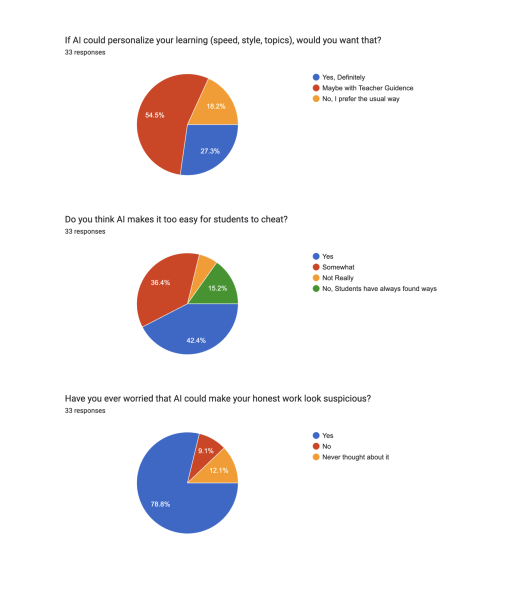
Many students also worry about academic integrity. They are concerned that their writing might one day be mistaken for AI-generated work. Seventy-eight percent of students agreed that this could become a problem and might affect how teachers judge essays and other assignments.
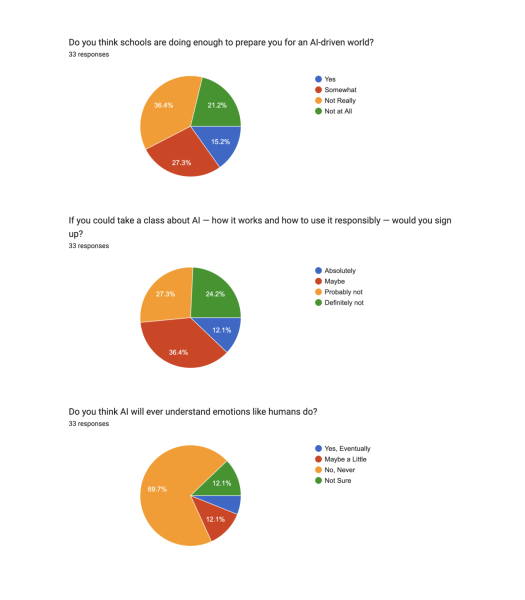
Even with these concerns, students said that AI still has limits. Many believe that AI cannot understand real emotions or form human relationships. It can provide information and complete tasks, but it cannot fully experience or interpret the feelings behind reading and writing.
AI is moving fast, and no one knows exactly where it will lead. Students recognize the risks but also see the potential benefits. If used responsibly, AI could become a helpful tool rather than a threat to future careers.