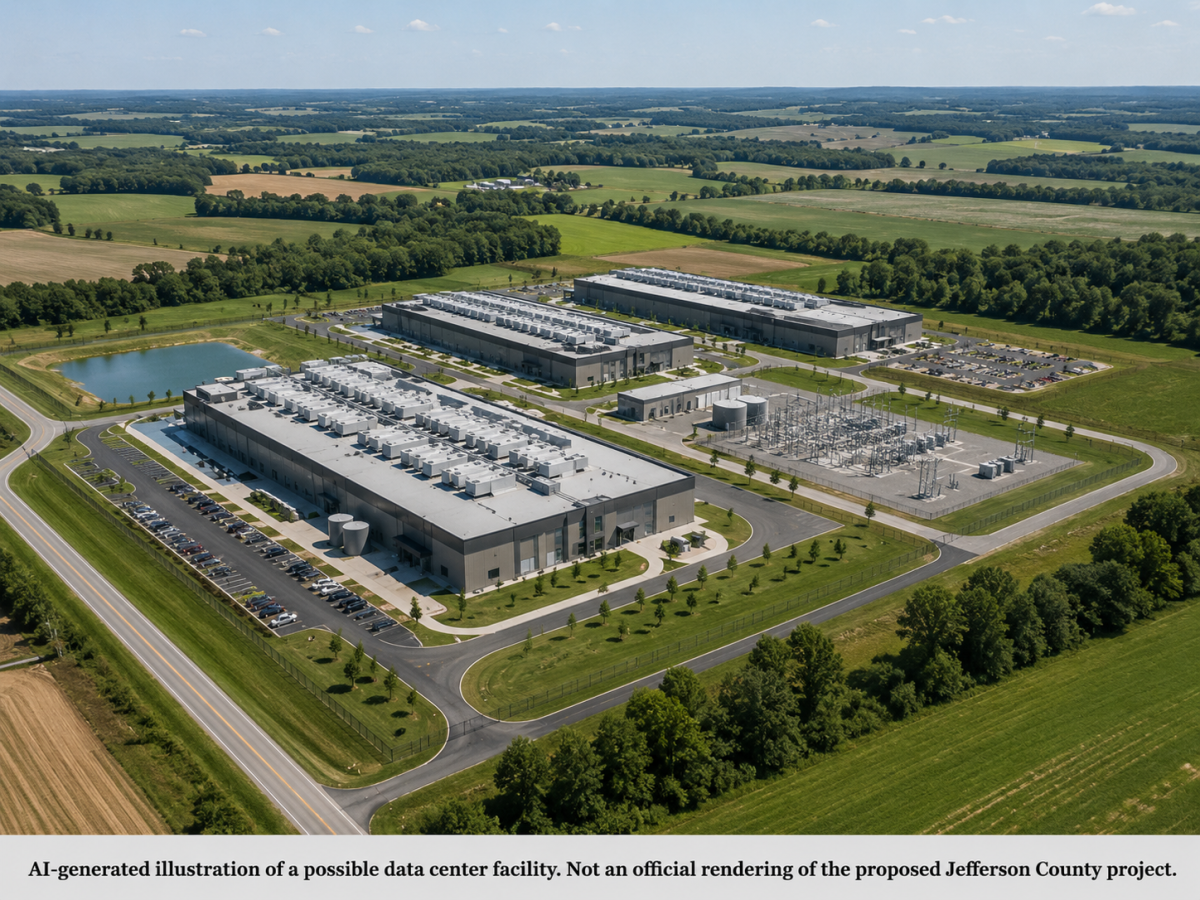
With recent innovations in artificial intelligence, data centers have become a growing topic of national and local debate.
According to Cushman & Wakefield, the Americas now host 43.4 gigawatts of operational data center capacity, with 93.6% of that capacity located in the United States.
Artificial intelligence, or AI, is technology that enables computers and machines to simulate human learning, comprehension, problem-solving, decision-making, creativity, and autonomy. An AI data center is a facility that houses the computing, networking, storage, energy, and cooling infrastructure needed to train, deploy, and run AI applications.
As AI continues to expand, many people are asking questions such as, “Will AI take our jobs?” and “Is AI safe to use?” The truth is that many of those answers are still developing.
Americans have a variety of views on AI and data centers. According to the Pew Research Center, about half of Americans say the increased use of AI worries them. When it comes to data centers, common concerns include higher electricity prices, environmental effects, and the risk of blackouts.
Those national questions have now reached Madison.
A proposal has been submitted for a data center project at a portion of the former Jefferson Proving Ground. The plan was submitted by the Ford family, which owns the land involved in the proposal. According to an April 1 article in The Madison Courier and a WHAS11 report published Monday, supporters say the proposed data center could bring about 300 jobs to the area and generate about $60 million in annual tax revenue for Jefferson County.
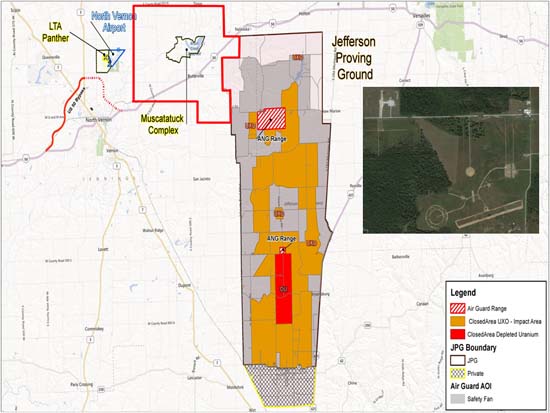
Image courtesy of the Indiana National Guard.
At Madison Consolidated High School, students have differing views on the proposed data center and the impact of artificial intelligence.
Junior Henry Schmidt said he sees AI as useful.
“AI is generally a good tool in everyday life,” Schmidt said.
Schmidt said AI allows people to access information more easily and at a faster pace.
Junior Esphyr Koren disagrees.
“I am not a fan of AI,” Koren said.
However, both Koren and Schmidt said they do not believe AI should be completely dismantled.
“At this point, it is too deeply rooted in society to be removed,” Koren said.
The students also disagreed about whether Madison needs a data center.
Koren said she does not believe Madison needs one “simply because I feel like that would contribute to the use of AI as a whole.”
Schmidt said he is more willing to trust local decision-makers.
“I think if our city decides that it is a good and valuable addition, then I am leaning toward trusting them, given the knowledge I have,” Schmidt said.
Koren also raised concerns about the environmental effects of additional data centers.
“I feel like extra data centers would contribute to the environmental issues nationally,” Koren said.
Madison Mayor Bob Courtney spoke with The Madisonian about the proposed data center and said the city and county are still working through the process with the Ford family.
“There’ll be an intentional process,” Courtney said, explaining that officials are evaluating the proposal and determining whether it is a good fit.
Courtney said the property is already zoned and described the proposed use as “conducive” for that space. He also said the location could be beneficial for Jefferson County.
Some community members have raised questions about possible health and environmental effects, including air quality and water contamination. Courtney said the land is currently underused and that the project could add economic value to the community.
“As it’s currently vacant and probably dilapidated, there’s no determined use,” Courtney said.

Photo courtesy of the City of Madison.
Courtney said the project could bring construction jobs in the short term and additional workforce opportunities in the long term.
“There’s an immediate short-term positive impact through construction-related jobs,” Courtney said.
He also said a project of this size would likely take a couple of years to complete. As for long-term employment, Courtney said: “It could be a great opportunity for the skilled or unskilled workforce who are here, but also attract more population.”
Courtney said the possible tax revenue number is still preliminary.
“It’s a little preliminary to actually hone in on what dollar amount it is,” Courtney said.
He said officials must weigh the project’s value against its potential costs and concerns.
“You always come back to the value proposition,” Courtney said. “Is it worth the investment?”
Like many communities across the country, Madison now faces that question directly. Data centers can bring jobs, tax revenue, and technological investment, but they also raise concerns about energy use, environmental impact, and quality of life.
Whether the proposed data center is worth the investment is a question Madison residents and local officials will have to continue weighing.